


STRESS LEAKS
The Sneeze Cross: 7 Reasons Women Who Leak When They Laugh Are Training the Muscle Instead
Squeeze before you sneeze, cross your legs, pray. If that's your plan for cold season, there's a better one.

Everyone knows the move. A tickle in your nose, and before the sneeze lands you're already crossing your legs and bracing on the counter. Laughing too hard at dinner. Jumping with the kids. Coughing through a cold.
“I'm two years out, kegels all the time, and still pee when I sneeze or cough too violently.”A comment on r/beyondthebump
That's a stress leak: pressure from a sneeze, laugh or jump pushes past a pelvic floor that isn't holding the way it used to. It's a muscle problem, so it makes sense to train the muscle. The hard part is finding it.
Is this you?
- You cross your legs before every sneeze
- Laughing too hard has ended with a quick trip to the bathroom
- Cold season means pads, every day
- You skip the trampoline, the jump rope, the dance floor
- You've done Kegels and still can't tell if you're doing them right
- You wear a liner "just in case" on good days too
Ticked two or more? Keep reading.
1It's made for the sneeze kind of leak
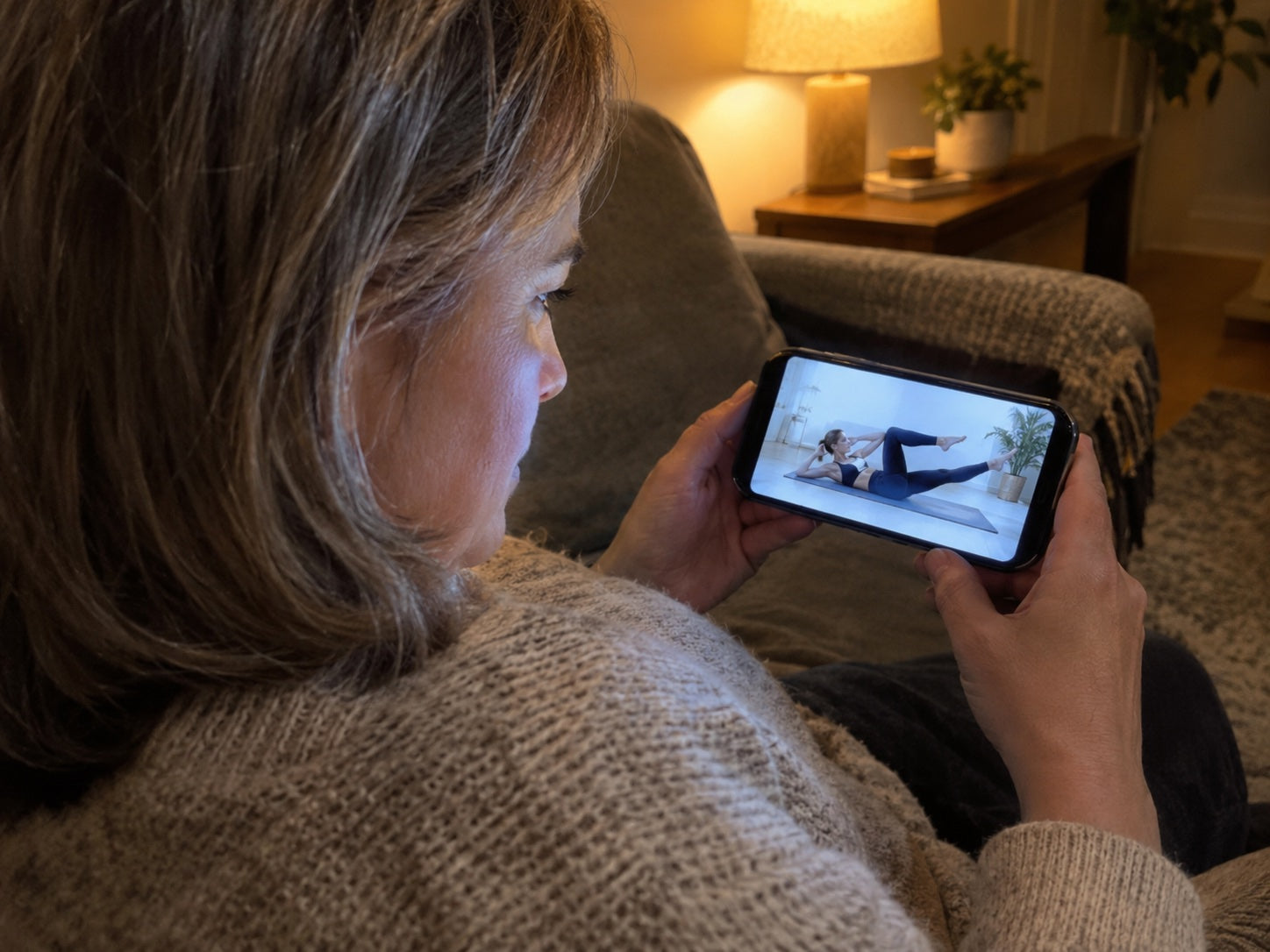
The trainer has four programs. P1 and P2 are for stress leaks: the sneeze, laugh, cough and jump kind. You pick the program, set your level, and the session runs on its own.
The Slay Harbor Pelvic Floor Trainer takes the guessing out. A small probe sends gentle, adjustable pulses that make your pelvic floor muscles contract on their own. You feel exactly where the muscle is, and what it feels like when it lifts. Then you squeeze along with it.
The trainer does the finding. You do the practice.
2You turn it up until you feel it. Not before.
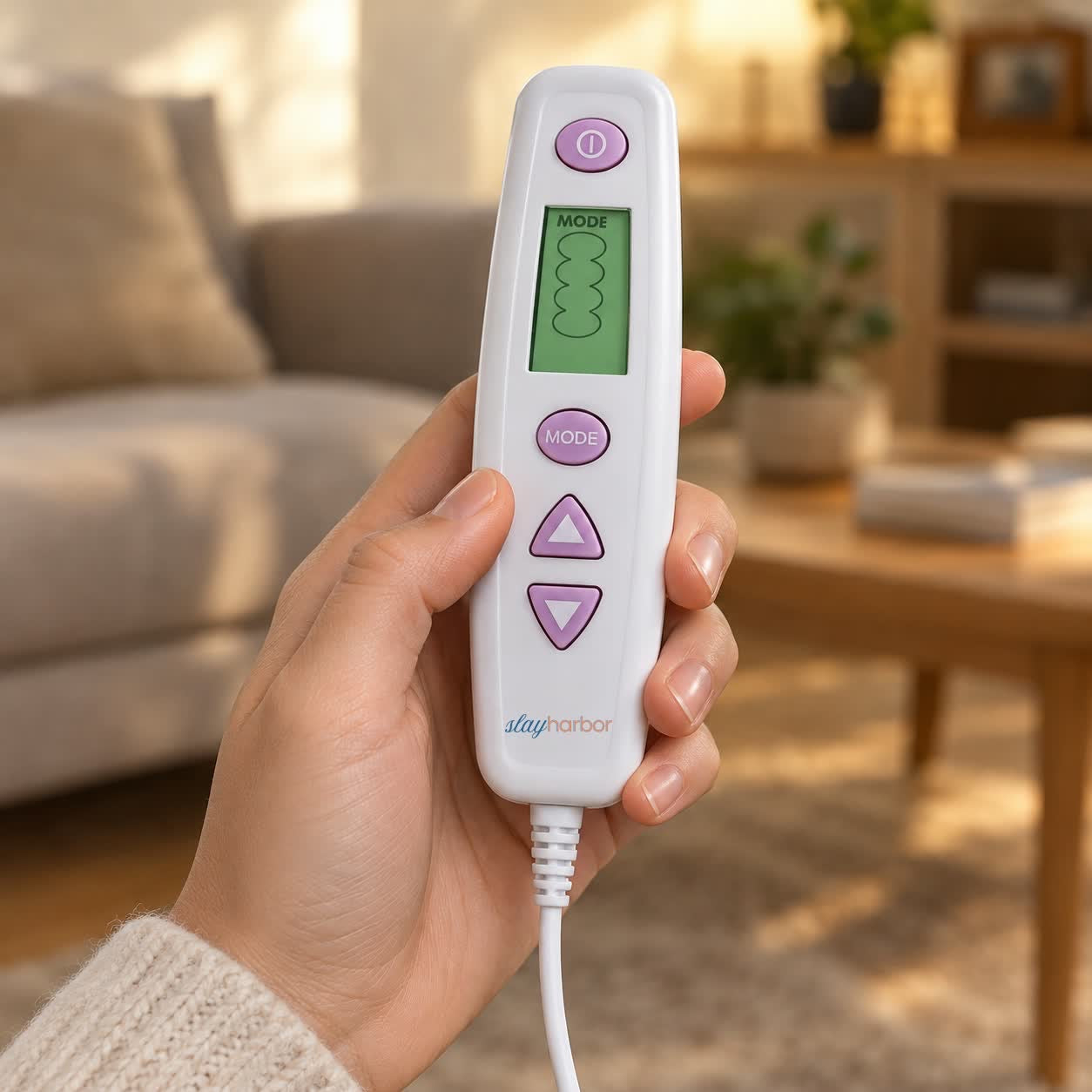
If you're a little scared of this, you're in good company. Women who use pelvic floor stimulators say they were nervous before the first session. The usual verdict afterwards: not painful, just a weird feeling.
You start on the lowest level and press up, one step at a time, until the squeeze feels firm and comfortable. Some women feel it right away. Others feel almost nothing at first and need to go higher. Either way, you're in charge of the dial, and the screen shows your level so you can pick up there next time.
No more "is anything even happening?" You'll know.
3It's built for women who forget (so, everyone)

“I tried to keep up with doing kegels but I forget.”A review of a pelvic floor trainer on Amazon
Kegels fail quietly. You mean to do them at red lights, at your desk, before bed. Then a week goes by. Then a month.
The trainer turns it into a set thing you do, not something you have to remember a hundred times a day. Insert the probe, pick your program, press start. Each session runs about 25 minutes and switches off by itself.
So you put a show on. Watch your shows, work your muscles. It becomes the most boring part of your evening, which is exactly why it sticks.
4No app. No Wi-Fi. No pairing.

“I don't think I need a Wifi connected coochie.”A comment on r/Menopause
Fair. A lot of trainers live inside a phone app: pairing, updates, calibration, sensors that stop syncing. When women complain about pelvic floor trainers, app and Bluetooth problems come up again and again.
This one is a controller with a screen and a few buttons. Power, mode, up, down. The screen shows your program and your level. It's rechargeable, and the USB cable is in the box. That's the whole setup.
5No waiting room. No $250 visits.
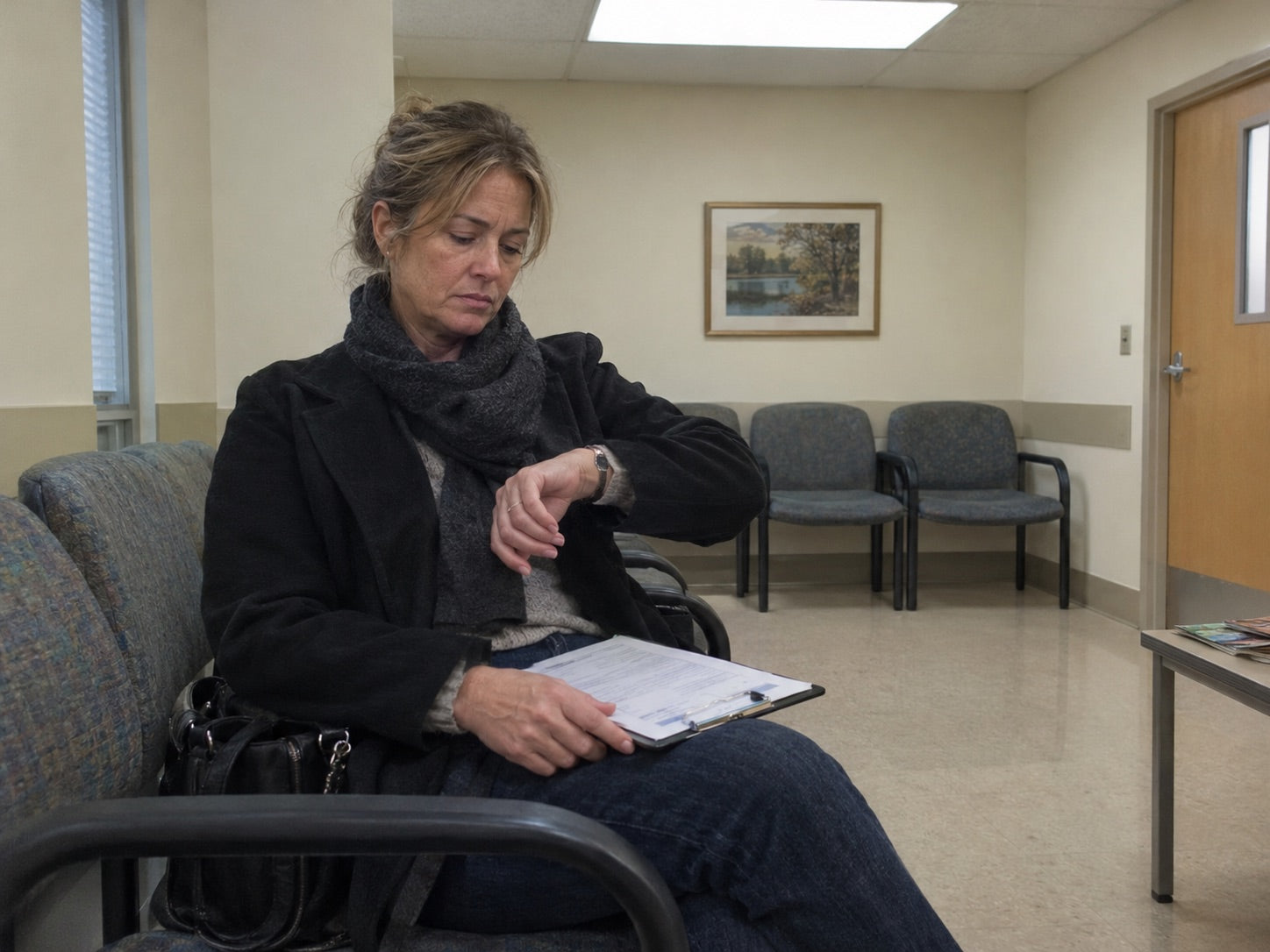
“I recently just saw the only pelvic floor therapist in my area for $250.”A post on r/PelvicFloor
She was told she'd need 15 to 20 weekly visits. That's around $4,000. Another woman in the same thread said sessions near her run $350 to $500 each.
Pelvic floor physical therapy is the gold standard, and if you can get it, go. But plenty of women can't afford it, can't find it, or simply don't want to be pantsless on a table in front of a stranger.
The trainer is something you do alone, at home, as often as your schedule allows. Already seeing a physio? It's an easy way to keep practising between visits. Bring it along and ask how to fit it into your plan.
6Do the math on liners. It isn't close.
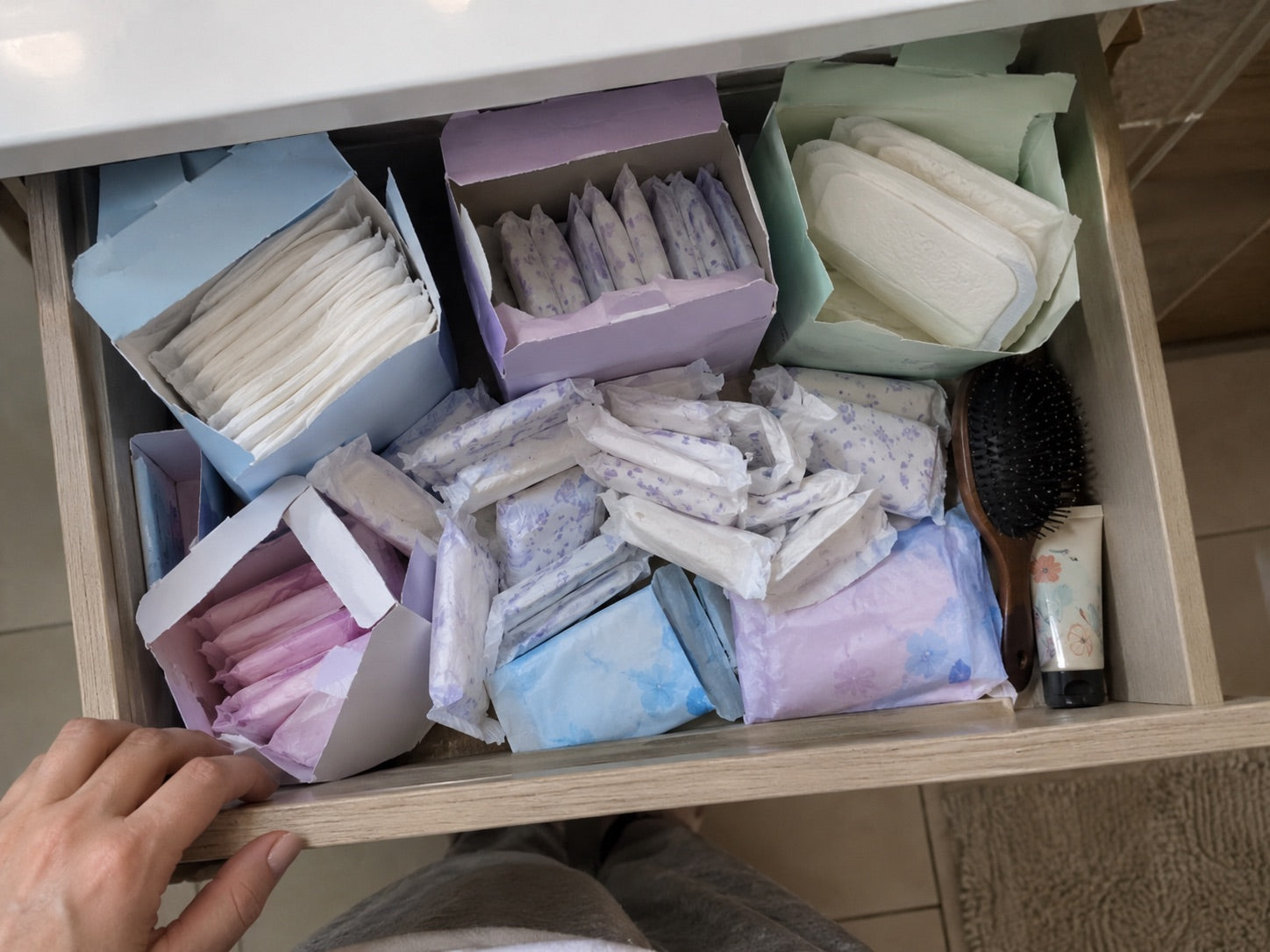
“I have been wearing a pad every single day for the past 7 years.”A comment on r/Menopause
Liners feel cheap because you buy them one box at a time. A 48-pack of Poise daily liners is $6.58 at Walmart. One a day is about $50 a year. Two or three a day, plus pads for the heavy days, and you're past $100 to $150 a year. Every year. With nothing to show for it.
Liners catch the leak. They don't do anything about the muscle. Here's how the usual options stack up:
| Option | What it costs | What it does |
|---|---|---|
| Liners and pads | $50 to $150+ a year, every year | Catches the leak. Nothing for the muscle. |
| Leakproof underwear | About $25 a pair, and you need a drawer of them | Catches the leak. Nothing for the muscle. |
| Kegels on your own | Free | Works if you can find the right muscle and remember to do them. |
| App-based trainer (Perifit Care+) | $179 ($143 on sale) | Measures the squeeze you make, through a phone app. Finding the muscle is still on you. |
| Stick-on e-stim pads (Elitone) | About $400 to $500, plus refill gel pads | Worn outside, under clothes. Pricey to start and to keep going. |
| Pelvic floor physical therapy | Often $250 a visit self-pay, for 15 to 20 visits | Expert, hands-on care. The gold standard if you can get it. |
| Slay Harbor Pelvic Floor Trainer | $99, once | Makes the muscle contract so you feel it, then you squeeze along. At home, no app. |
Prices checked October 2026 on walmart.com, perifit.co, knix.ca and elitone.com; physio costs as reported by women on r/PelvicFloor. Your costs may differ.
$99 once is less than a single year of liners for a lot of women. And it's the only option here that helps you find the muscle and works it, at home, without an app.
See the trainer → or find your program with the 60-second quizFree US shipping over $100 · Ships in 2 to 4 business days
7Straight answers before you buy

Women who've been burned before say the same things: the ad said "10 minutes a day" and the manual said something else; every review looked paid; they read every review ten times and still didn't know what to believe.
So here it is, plainly. Sessions are about 25 minutes. The price is $99. There are four programs: P1 and P2 for stress leaks (the sneeze, laugh, jump kind) and P3 and P4 for urge leaks (the sudden "I have to go right now" kind). And it takes weeks, not days:
- Week 1Learn the sensation. Start on the lowest level and turn it up until the squeeze feels firm and comfortable.
- Week 2Squeeze along with each pulse. The muscle starts to feel like something you can find on purpose.
- Weeks 3 and 4It turns into routine: about 25 minutes, a show on, several evenings a week (follow the manual for how often).
- Weeks 5 to 12Start noticing the moments: the sneeze, the laugh, the stairs. Results vary and nothing is overnight. Pelvic floor programs in studies usually ran 8 to 12 weeks, so give it that long, alongside your Kegels.
Not sure if yours is stress, urge or a bit of both? Our 60-second quiz asks a few quick questions and tells you which program to start on, so you aren't guessing on day one.
Get the trainer: $99 →THE SLAY HARBOR PELVIC FLOOR TRAINER
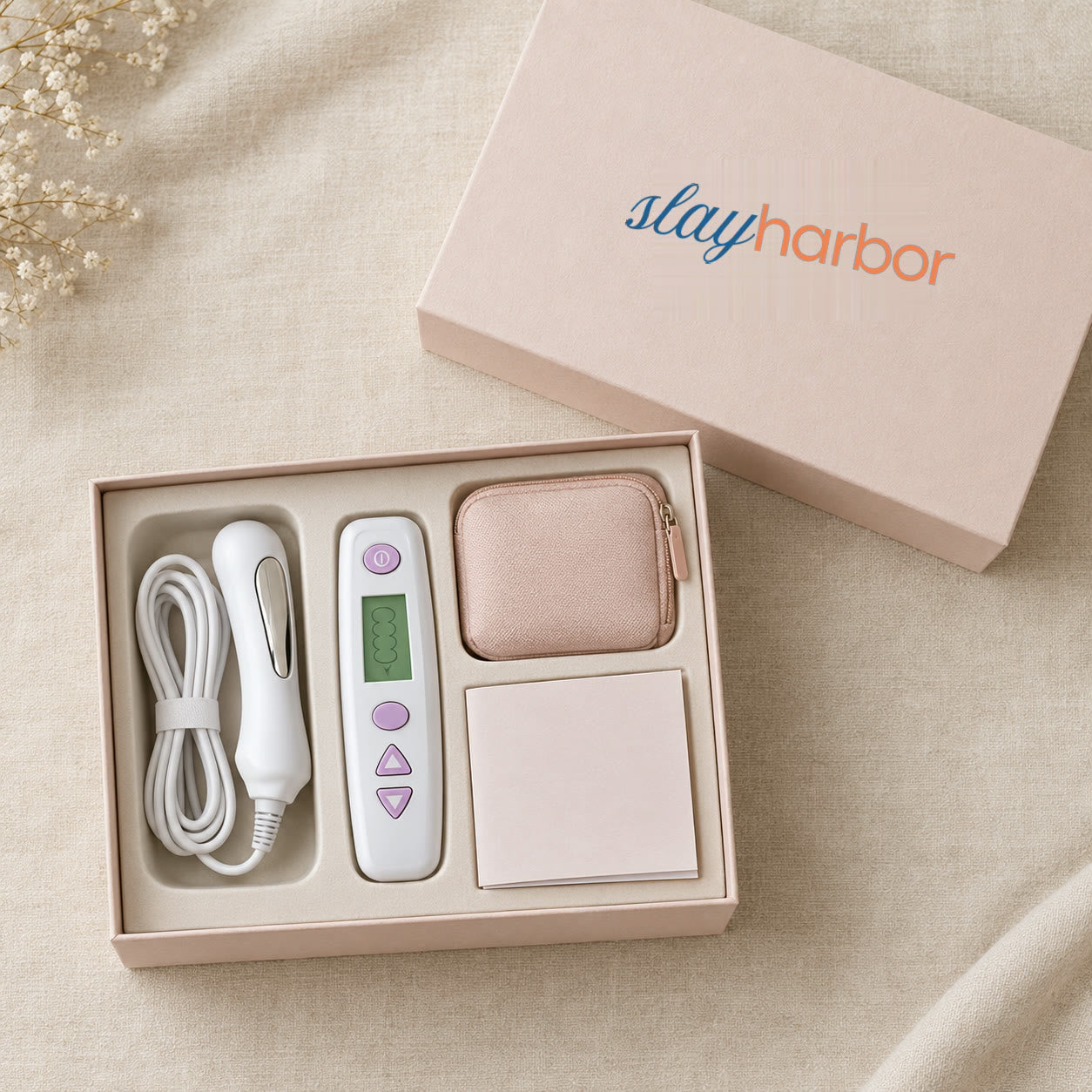
$99.00
One-time price. No subscription. No app.
Free gift with every order: the PelviCare Guide, your 12-week plan (ebook). Want backup while you train? Add the leakproof 3-pack in your cart.
- 4 programs: P1 and P2 for stress leaks, P3 and P4 for urge leaks
- About 25-minute sessions that switch off by themselves
- Screen shows your program and level. No app, no Wi-Fi
- Rechargeable, USB cable included
Free US shipping over $100, otherwise $6.95 · Ships in 2 to 4 business days, then 7 to 12 business days tracked USPS
The questions women actually ask
I'm nervous it will hurt. Will it?
It shouldn't. You start at the lowest setting and press up one step at a time, only until the squeeze feels firm and comfortable. Turn it down or stop any time. A lot of women say the first session is mostly just a weird feeling.
What if I can't feel anything at first?
That's common. Everyone's starting level is different. Keep stepping it up slowly until you feel a clear squeeze, then stay there.
How long is a session, really?
About 25 minutes. Sessions are a fixed length and switch off by themselves.
Is there an app?
No. No app, no Wi-Fi, no Bluetooth. The controller has power, mode, and up and down buttons, with a screen that shows your program and level.
Can I use it after having a baby?
Wait until your clinician clears you, usually at or after your 6-week check, and ask them first.
Who shouldn't use it?
Talk to your doctor first if you are pregnant, have a pacemaker or another implanted device, or have a pelvic infection or unexplained bleeding. If you have pelvic pain or think your pelvic floor may be too tight, see a pelvic floor physio first. Read the manual before your first session.