


THE SHOWDOWN
I Tried 5 Fixes for Leaking During Workouts. Here's How They Ranked.
Pads, Kegels on my own, a Kegel app, pelvic floor PT and an at-home EMS trainer. One jump rope, four questions, one clear winner for my week.

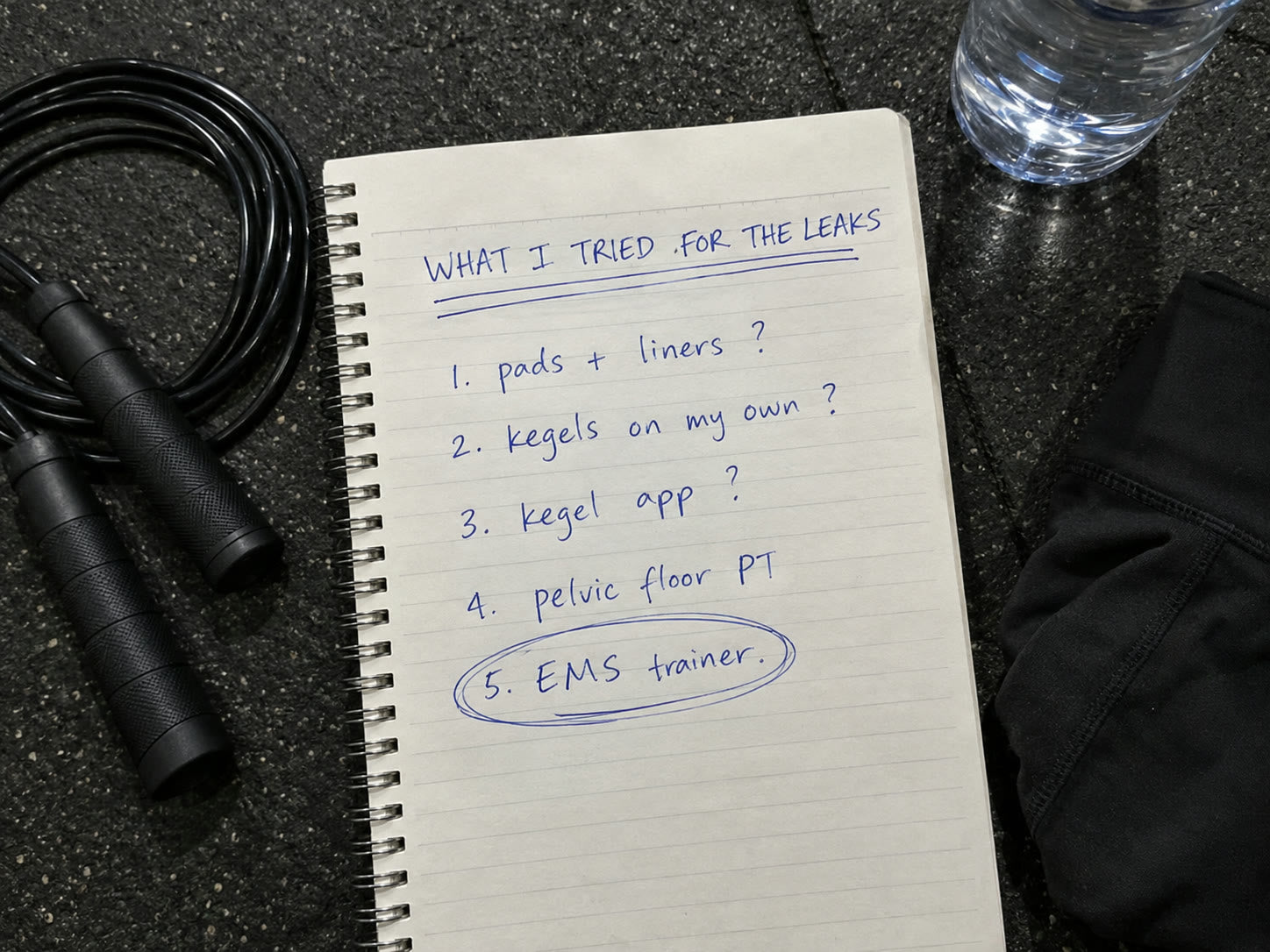
The list I kept in my gym bag.
Double-unders are where I find out how my week is going.
If my pelvic floor is having a bad week, I know by rep fifteen. For three years my fix was the darkest leggings I owned and a bathroom stop before the warm-up.
“What gets me is jumping like in a workout class or jump rope.”A woman on r/AskWomen
So I did what I do with everything else in my training. I tried the options one at a time and kept notes. Here's what each one actually does, and how I'd rank them if you leak when you jump, run or lift.
My four questions
- Does it train the muscle, or just hide the leak?
- Can I tell it's working?
- Will I actually keep doing it?
- What does it cost over a year?
#5Pads and liners
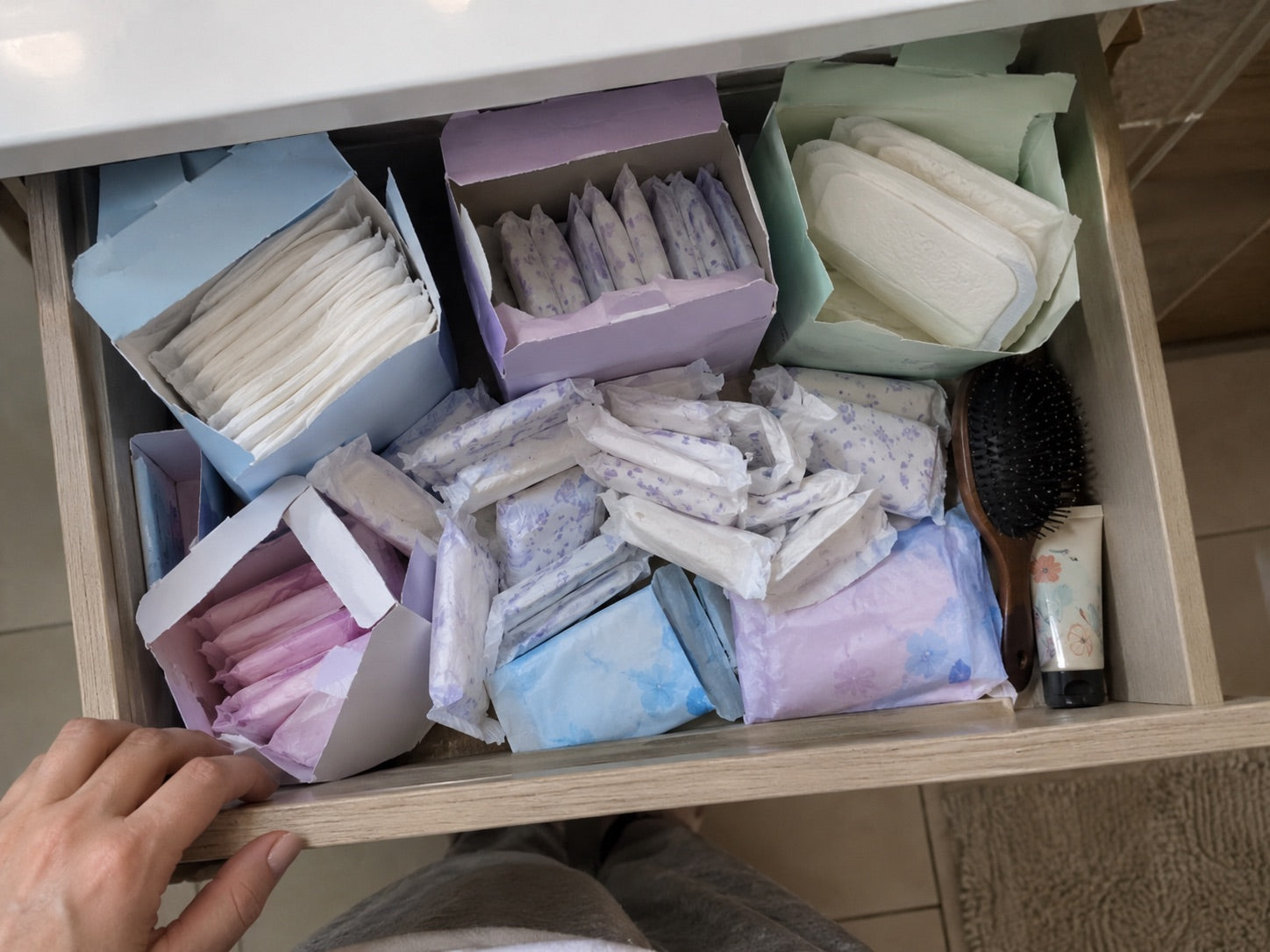
Where everyone starts, including me. A liner on jump-rope days, a light pad for long runs.
“I've definitely thrown a cup of water over myself in all the summer races I've run this year to mask the leaking!”A runner on r/XXRunning
The good: Easy. Cheap per box. Catches small leaks.
The catch: Trains nothing. About $166 a year at two light pads a day, every year. Rubs on long runs.
Verdict: A backup, not a fix.
#4A Kegel app
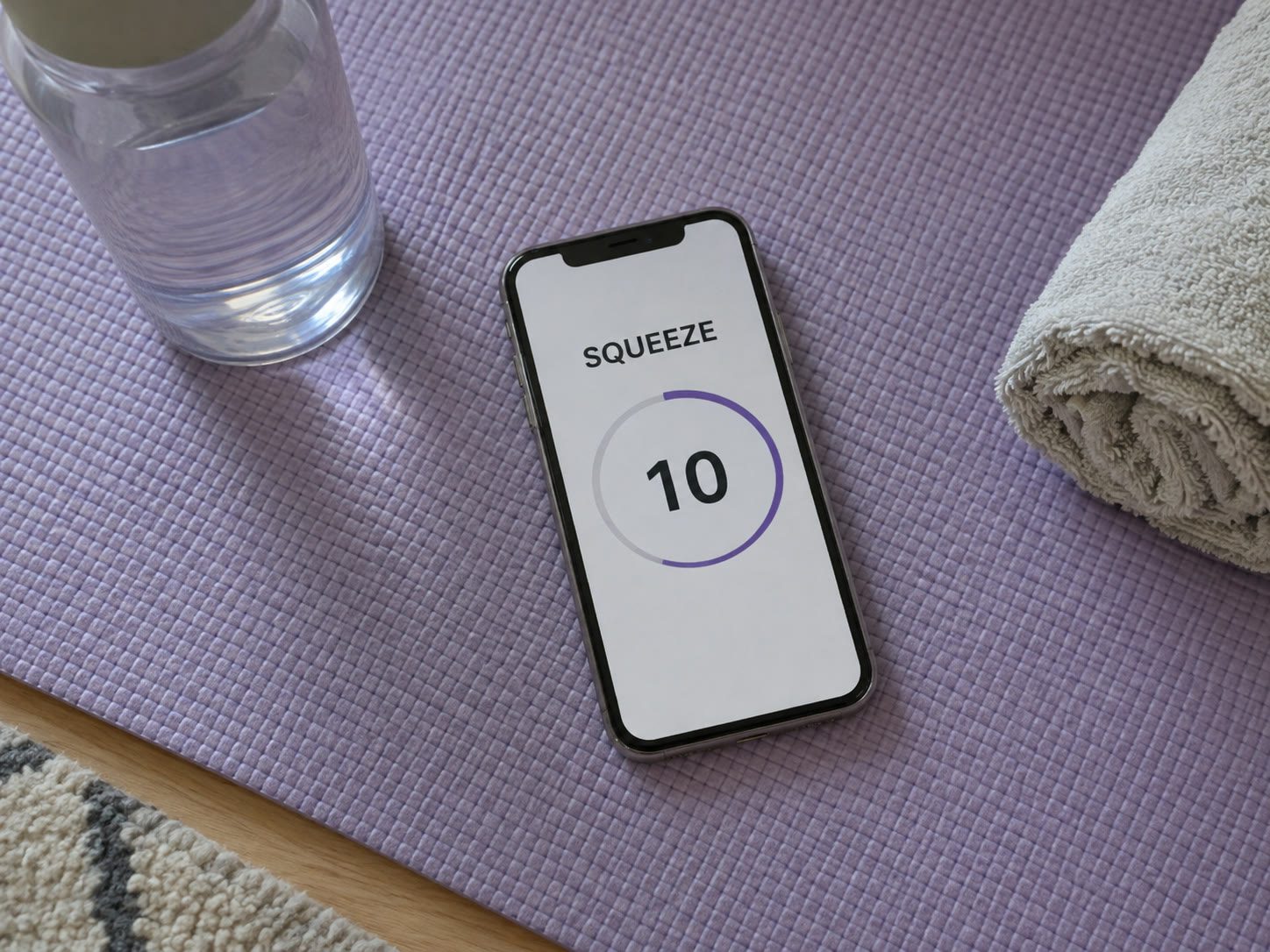
I downloaded one that buzzed three times a day and counted me through each hold. It was great at reminding me. It had no idea which muscle I was squeezing, and neither did I.
“all the app does is count down 10 seconds per Rep, which I'm pretty sure nobody needs an app for.”A two-star review of a Kegel app on Google Play
The good: Free or low cost. Good reminders.
The catch: It counts the reps. It can't tell you if the right muscle moved. The reminders went off mid-meeting, so I muted them.
Verdict: A timer with a nice font.
#3Kegels on my own
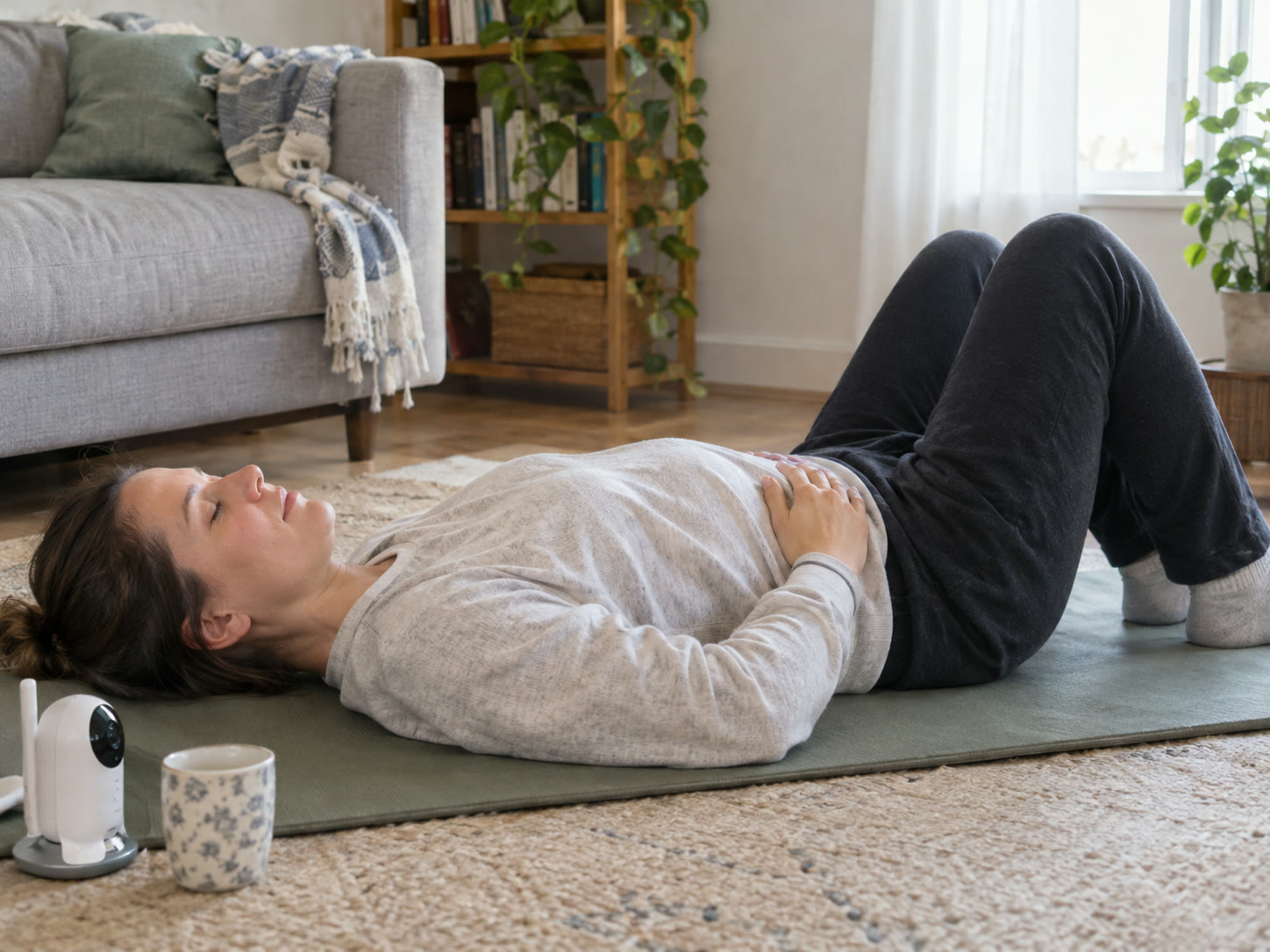
Free, private, and the first thing any doctor tells you to do. US guidelines recommend pelvic floor training first for stress leaks (American College of Physicians, 2014). The catch is doing it right, and doing it for weeks.
It isn't just you. In one small, often-cited study, only about half of women did a correct Kegel after being told how, and about 1 in 4 used a technique that could make leaks worse (Bump et al., 1991). In a US clinic study of 250 women who said they already knew how, about 1 in 4 couldn't do one correctly on the first try (Kandadai et al., 2015).
“for regular kegels I feel like I am squeezing my butthole rather than the proper muscles”A woman on r/fitpregnancy
The good: Free. Works well if you can find the muscle and stick with it.
The catch: No feedback. Easy to squeeze the wrong thing. Easy to forget.
Verdict: Great if you can feel it. I couldn't.
#2Pelvic floor physical therapy
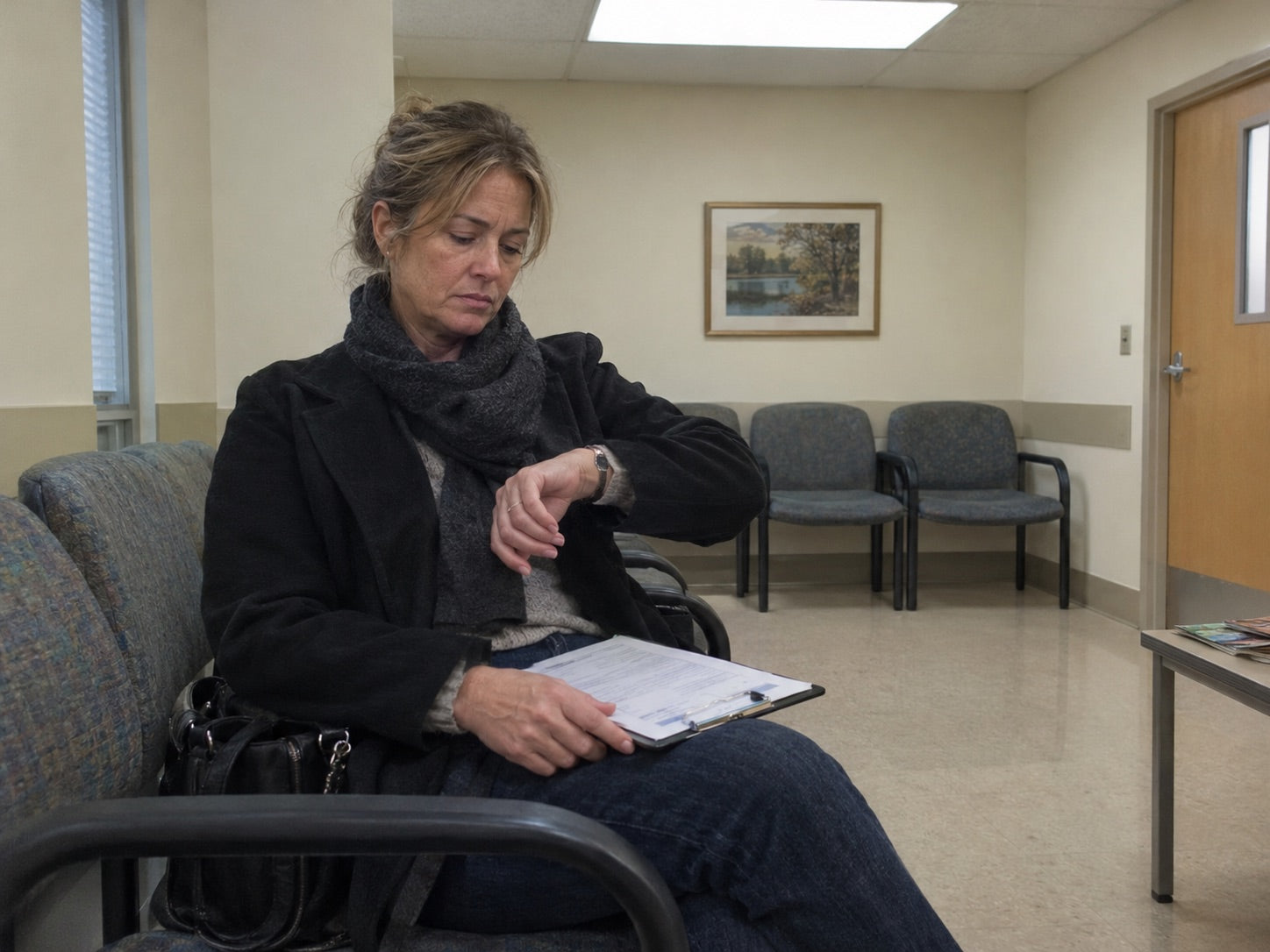
This is the gold standard, and I want to be fair about that. A good pelvic floor PT examines you, tells you what's going on and builds you a plan. If you can get it, go.
“I recently just saw the only pelvic floor therapist in my area for $250.”A post on r/PelvicFloor
For me the problem wasn't the care. It was the waitlist, the drive and the bill, week after week.
The good: Expert, hands-on, personal.
The catch: Often around $250 a visit self-pay, every week, plus the time off.
Verdict: The best care there is, if your budget and calendar allow it.
#1An at-home EMS trainer
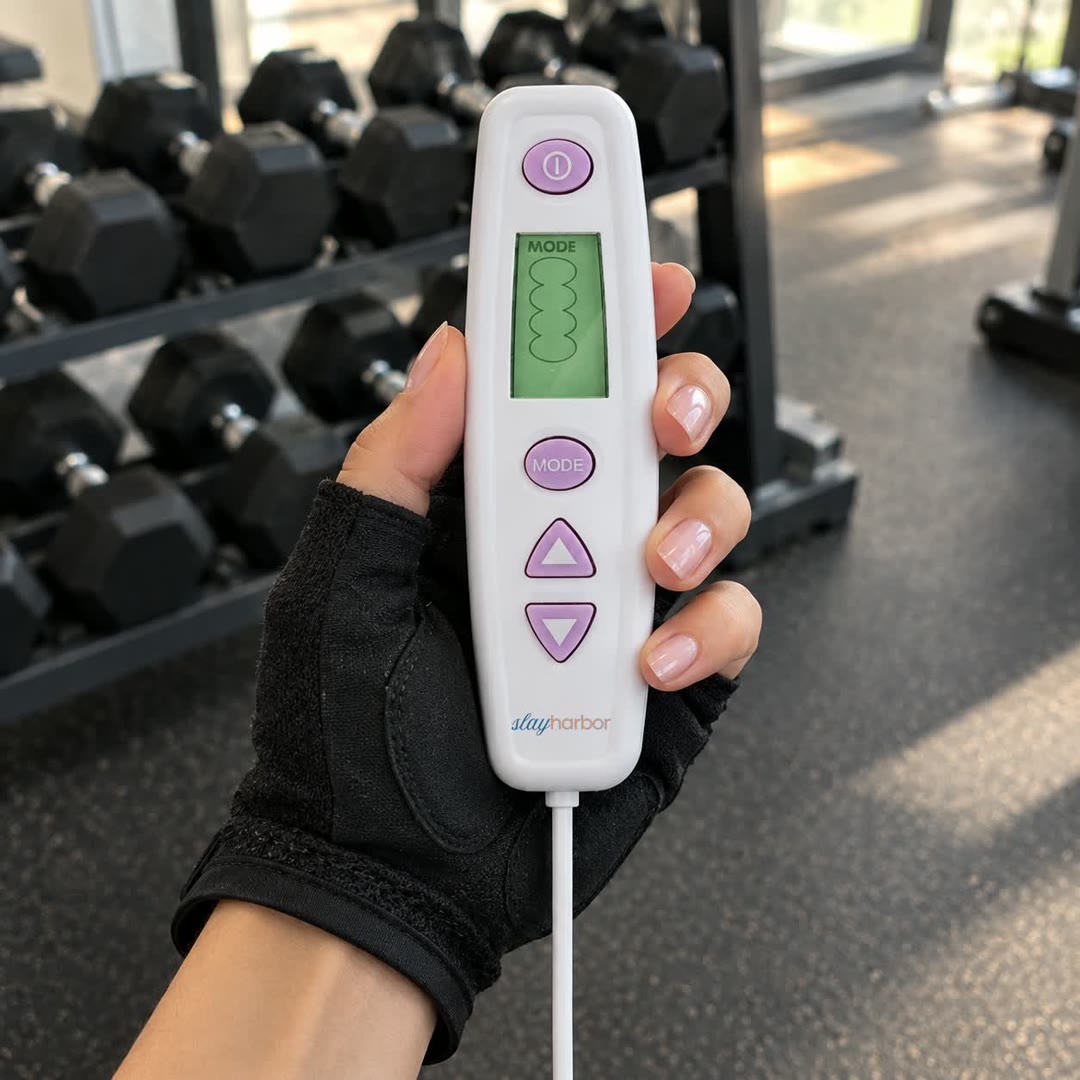
The one I kept: the Slay Harbor Pelvic Floor Trainer. A small probe on a cable, a controller with a screen, and gentle EMS pulses that make the pelvic floor contract on its own.
It answered all four of my questions. It trains the muscle, not just the leak. I could feel exactly which muscle was working from the first session, once I turned the level up. It's about 25 minutes lying down, timed by the controller, so I actually do it. And it's $99, once.
It's also close to what a lot of physios use for women who can't find the muscle. In a small randomised trial, women who couldn't contract their pelvic floor on purpose had weekly stimulation sessions, squeezing along with each pulse, or no treatment. After 8 weeks, 36% of the stimulation group could contract it on their own, against 12% of the others (Ignácio Antônio et al., Journal of Physiotherapy, 2022).
The good: Does the contractions for you. You feel the right muscle. 4 programs: P1 and P2 for stress leaks, P3 and P4 for urge leaks. No app. $99 once, 60-day money-back guarantee.
The catch: It takes weeks, not days. It's a 25-minute session, so it's an evening thing, not a red-light thing. Read the "who shouldn't use it" list first.
Verdict: My pick for active women who want to train the muscle at home.
See my #1 pick: $99 →Plus a FREE Pelvic Floor Bonus Pack until November 30 · 60-day money-back guarantee
The scorecard
| Option | Trains the muscle? | Can you tell it's working? | Easy to keep up? | Cost |
|---|---|---|---|---|
| Pads and liners | No | No | Yes | About $166 a year, every year |
| Kegel app | If you find it | No | Until you mute it | Free or low cost |
| Kegels on your own | If you find it | Hard to tell | Easy to forget | Free |
| Pelvic floor PT | Yes | Yes, with your PT | Depends on your week | Often about $250 a visit |
| EMS trainer | Yes | Yes, you feel it | 25 minutes lying down | $99 once |
Prices checked October 2026: Poise light pads, 48 count, $10.94 at Walmart (two a day); physio cost as reported by women on r/PelvicFloor. Your costs may differ.
My honest take: if you can afford a pelvic floor PT, see one, and ask about using a trainer between visits. If you can't, or you just want to start this week, the trainer is the one that does the finding for you.
What the first 12 weeks look like
- Week 1Learn the sensation. Start on the lowest level and step it up until the squeeze feels firm and comfortable.
- Week 2Squeeze along with each pulse. The muscle starts to feel like something you can find on purpose.
- Weeks 3 and 4It turns into routine: about 25 minutes, a show on, several evenings a week (follow the manual for how often).
- Weeks 5 to 12Start noticing the moments: the warm-up, the landing, mile six. Results vary and nothing is overnight. Programs in studies usually ran 8 to 12 weeks, so give it that long, alongside your Kegels.
THE SLAY HARBOR PELVIC FLOOR TRAINER
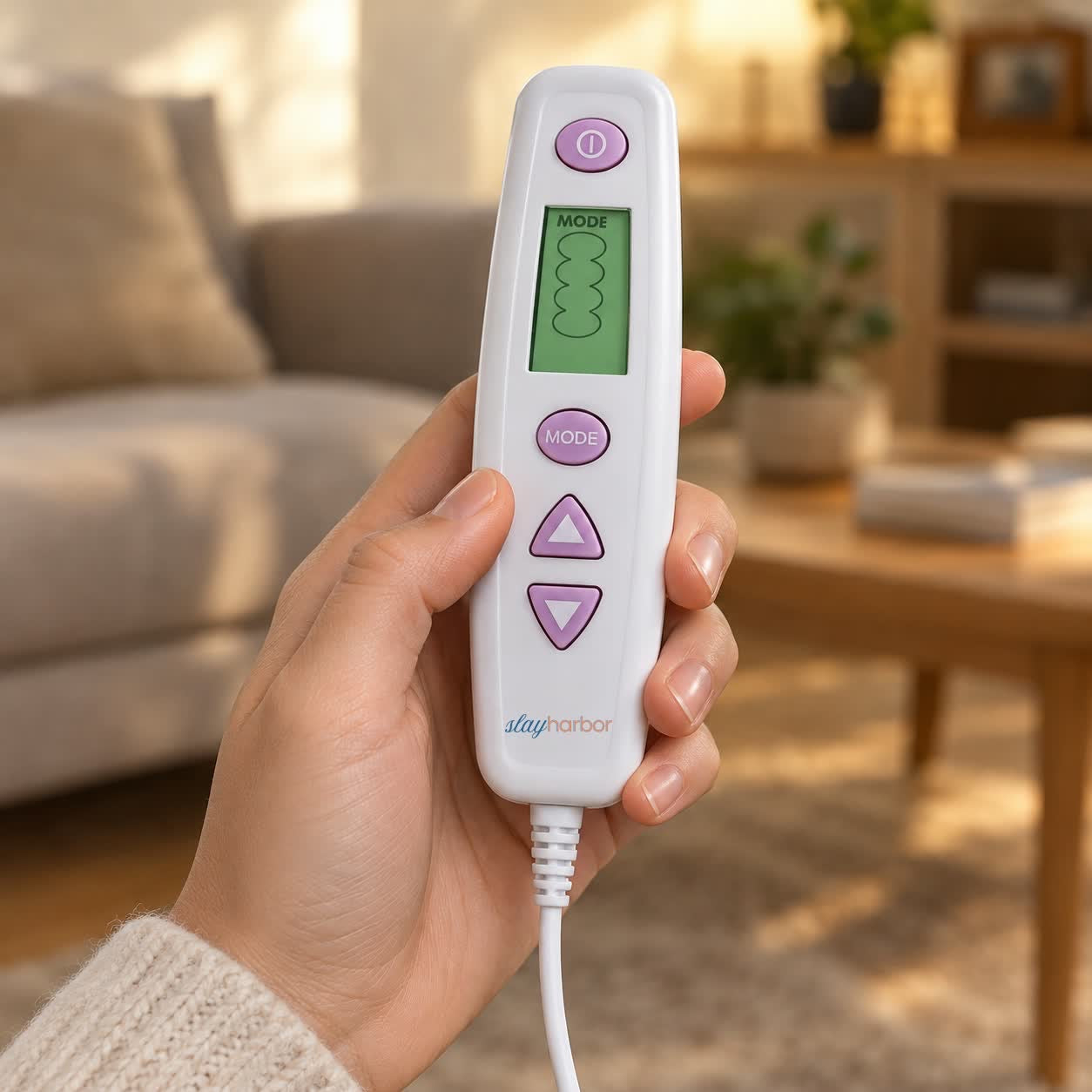
$99.00
One-time price. No subscription. No app.
EARLY BLACK FRIDAY: FREE BONUS PACK
4 printable pelvic floor guides, instant download:
- PelviCare Guide
- 12-Week Trainer Plan and Progress Tracker
- Bladder Diary and Trigger Guide
- Postpartum and Menopause Companion
Free with your trainer until November 30
- 4 programs: P1 and P2 for stress leaks, P3 and P4 for urge leaks
- About 25-minute sessions that switch off by themselves
- FDA-cleared EMS. No app, no Wi-Fi
- Rechargeable, USB cable included
- 60-day money-back guarantee
Free US shipping over $100, otherwise $6.95 · Ships in 2 to 4 business days, then 7 to 12 business days tracked USPS
The questions women actually ask
I'm nervous it will hurt. Will it?
It shouldn't. You start at the lowest setting and press up one step at a time, only until the squeeze feels firm and comfortable. Turn it down or stop any time. A lot of women say the first session is mostly just a weird feeling.
What if I can't feel anything at first?
That's common. Everyone's starting level is different. Keep stepping it up slowly until you feel a clear squeeze, then stay there.
How long is a session, really?
About 25 minutes. Sessions are a fixed length and switch off by themselves.
Is there an app?
No. No app, no Wi-Fi, no Bluetooth. The controller has power, mode, and up and down buttons, with a screen that shows your program and level.
Which program do I use if I leak when I jump or run?
Leaks with impact, coughs, sneezes or laughs are stress leaks: P1 (mild) or P2 (moderate). If you also get sudden "I have to go now" urges, P3 and P4 are for those.
What if it doesn't work for me?
You have 60 days. If it isn't for you, email Slay Harbor for a refund.
Can I use it after having a baby?
Wait until your clinician clears you, usually at or after your 6-week check, and ask them first.
Who shouldn't use it?
Talk to your doctor first if you are pregnant, have a pacemaker or another implanted device, or have a pelvic infection or unexplained bleeding. If you have pelvic pain or think your pelvic floor may be too tight, see a pelvic floor physio first. Read the manual before your first session.
What's in the free Bonus Pack?
Four printable guides, instant download: the PelviCare Guide, a 12-Week Trainer Plan and Progress Tracker, a Bladder Diary and Trigger Guide, and a Postpartum and Menopause Companion. The download link comes with your order confirmation. Free with the trainer until November 30.